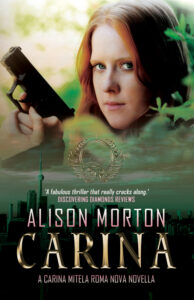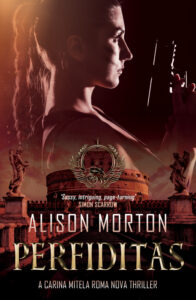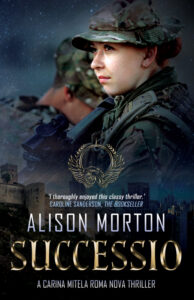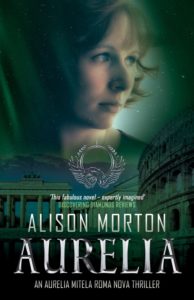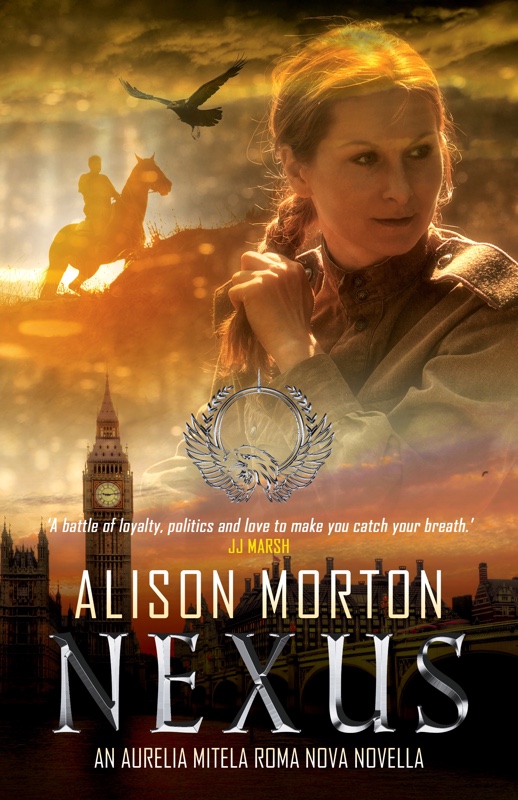
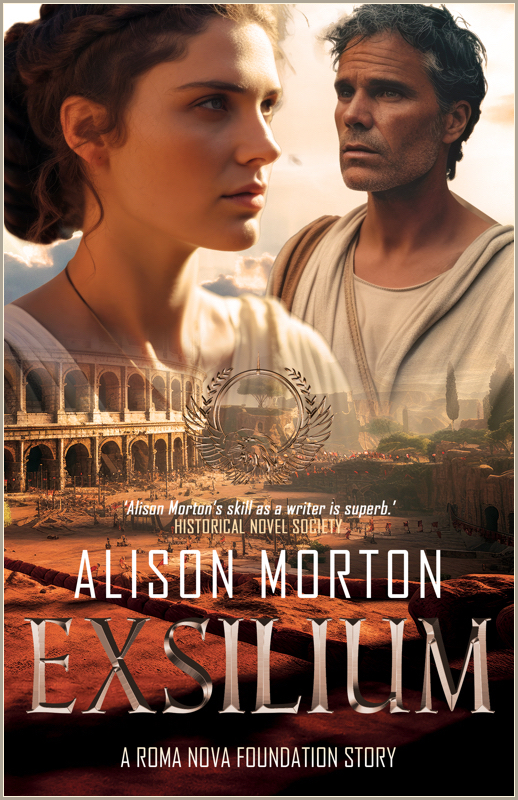
Read an extract HERE Click on image to buy INCEPTIO.
INCEPTIO_front cover_300dpi_v_v_sm
The Alliance of Independent Authors — Author Member
good_kindle_books

Not all self-published work is grey in the night

greycatNot all self-published work is crap.

Not all mainstream books are good.

Many self-published works are excellent.

Many mainstream books are dire.

All true. But the demarcation between the two is blurring. A reader doesn’t give a toss who produced a book they love. The things they do notice are rubbishy covers, unintelligible blurb, coarse, porous paper, bleeding (in the technical sense) fonts, crammed text – and those are just the production values.

Inside, a reader wants a story with great characters and a satisfying, if possible, stunning resolution. They don’t want flowery over-writing, rubbish spelling and grammar, weak plotting, unbelievable twists, gaping plot holes, characters’ names changing mid-book, solutions parachuted in, inaccurate historical detail, etc.

I read a lot, and across many genres, and nothing out of the above two lists is missing from either type of publishing. But beautiful books, well-written, well-edited, exist along the whole publishing spectrum. It is no longer tenable to say self-publishing bad, mainstream good.

The idea STILL persists that self-publishers don’t use copy editors, proofreaders, cover designers and other professionals. Um, they do. At the recent London Book Fair, services for the independent authors were prominent and varied.

As in mainstream, there is self-published rubbish out there – the write-it-in-a-month-and-bung-it-up-on-Amazon stuff. But something that is often not recognised is that self (sometimes known as indie) publishing has evolved from its homogeneous start and split into a variety of levels. At the top end are the well-written, well-edited, well-designed books with professional covers, sometimes produced by the author themselves, a group/collective they belong to or with bought-in services of all types. Their genres are often crossover, something that the mainstream publishing sector may not wish to take a risk on in difficult economic times. But these books are not to be dismissed and they sell in their thousands and thousands. Like mainstream, there are self-published authors whose books may only sell a few hundred, but who receive good reviews. They should not be dismissed, either.

And I hear that traditional publishers and agents are combing the self-published lists themselves looking for likely talent to add to their lists.  Two of my self-published writing friends have signed with top agents within the past few weeks.

Readers are a canny lot. They’ll ferret out the poor product, and consumer market forces will do its Darwinian thing. But whatever the diversity of the paths to publication, the results are all descended from the concept of the writer getting their story out there in an intelligible format to a receptive and willing reader.


Romans and steampunk?

CoverToday, I don’t only have a guest, I’m actually swapping blogs with Daniel Ottalini, another ‘Roman nut’ but with a difference… 

Daniel Ottalini is the author of The Steam Empire Series, a fantastical Roman and steampunk story brought to life in his debut novel, Brass Legionnaire. Daniel has been an avid reader all his life, starting at the grand old age of three. It’s always been his dream to write a novel and Brass Legionnaire was the winner of the Electronic Publishing Industry Coalition’s 2013 eBook Awards for best Action Adventure Novel.  Daniel’s second book, Copper Centurion, was published in May 2013. When not writing in his miniscule free time, Daniel is a full time teacher, part-time tutor, and full-time video-game aficionado. He also enjoys many outdoor activities such as soccer and hiking.

Over to Daniel…

Before I begin, let me say that it is an honor to be swapping blog postings with Alison today. You see, when I first started writing Brass Legionnaire, I clung to the idea that it was unique; special amongst the wide variety of Victorian era steampunk as an alternate history featuring Romans and their fancy steampunk arsenal. Discovering someone who has not only created a world where Roman culture and ideas have survived in addition to an actual Roman state (not Italy, as much as it pretends to be!) was a wonderful experience.

There is a reason that Europe has been a centerpiece of technological and cultural development in our history. Whereas the Muslim empires became great through their increased access to trade, technology and the exchange of ideas through various means, Europe went the opposite direction. War.

When the Western Roman Empire fell, it splintered into a haphazard variety of petty kingdoms, dukedoms, tribal areas and successor kingdoms. This complete diversity, and lack of overwhelmingly powerful successor kingdoms, as had happened to Alexander the Great’s empire, ensured that there was not one powerful area able to control the others. From this conflict grew the lust for new technologies to bash your opponent’s head with. Countries could be attacked, but it was difficult to conquer. The geography of Europe makes this so. Think about who, after the Romans, was able to conquer Europe? Charlemagne? Napoleon? Hitler? Never since Roman times could one civilization conquer, subsume and influence the others for such a long period of time. The closeness of European nations makes keeping technology secret impossible, while the geographic barriers – rivers, mountains, terrain and even weather (I’m looking at you, Mother Russia!) prevents those same forces from maintaining control through force of arms alone.

Brass Legionnaire Promo2_smThis is why steampunk is considered so very English/British, and not French or German or Russian. Each of those countries has been conquered by outsiders, whereas England, with the Channel separating it from the troubles of the mainland, has remained protected since 1066. Thus, England, especially Victorian England, benefited from the spread of technology, while also being safe from the consequences of it. Which leads us to another point.

What if Rome had not fallen and allowed the creation of an independent England?

Could a Rome, more concerned about external foes, have embarked on a massive technological research project? Many examples of medieval technology – crossbows being a prime example – could have been created using ancient technology and some small advances in materials. Small advances lead to bigger ones. All it takes is a hefty treasure chest, which the Romans definitely had.

So Rome could have become the technological superpower it is in my novels. The challenge in writing is not to create Rome itself, but to create a Rome where the technological advances make sense, not just tacked on to make a book ‘steampunk.’

To build steampunk into your world, you must first examine your world. What are some creatures your characters fear? Hold holy or important? Aztecs would hold eagles in awe, Chinese the dragon. My Romans? The same creature that terrified and awed them since the Punic Wars – the African elephant. Take that, make it machine and not animal, and voilà, a creature that makes sense and is connected to Roman history.

I’ve tried really hard to keep my technology in pace with the time period. Imagine if there had been no Dark Ages? Without that, technology would have continued to advance. And yet, my Romans are not running around with machine guns or repeating rifles for two reasons.

First, the natural tendency for such a large empire is to become complacent. Even fighting several wars, if you win the wars with the technology you have currently, why bother to develop new weapons or machines? That’s the problem my Romans are currently facing, which will be revealed in the upcoming novella Antioch Burns.

04-Clash-of-the-Mechwolves_smSecond, the Romans themselves were traditionalists, but also rampant technology stealers. The gladius, trademark Roman weapon, is originally Iberian, not Roman. The development of heavy cavalry armies is a Persian and barbarian idea, not Roman. So my Romans have stolen an idea (gunpowder) but adapted it to meet their current weapons – ballista and scorpions – not develop muskets or cannon. Why create something new when you can modify something that works perfectly?

So, to summarize the talking points and actually make sense for all of you:

  1. Understand your culture. What it fears, what it loves.
  2. Match your technology to your culture and time period. It helps even more if you can use a famous inventor who created or had similar ideas to design your technology (which is why so many steampunk authors have Tesla building lightning guns for their characters).
  3. Make your enemies smart, not cardboard cutouts. In Copper Centurion, my second novel, their opponents, the pseudo-Viking Nortlanders, have their own mechanical beast – the mechwolf. Needless to say, it surprises the Romans, who have a slight superiority complex, and creates some major challenges for their men as they march north.
  4. Use technology wisely. Technology does not, and should not, replace the human part of your story. I use technology to move people, to assist people, but never replace the human element. In the end, it is down to the one guy or gal making the decision.

When in doubt, read a history book. They are full of great ideas. Alternatively, play a video game such as Civilization or Total War. These games offer endless opportunities to create something new (Just imagine if the Byzantines had conquered Mecca and burned it to the ground using paratroopers? Or if the Chinese had stopped the Mongolian invasion at the gates of Peking with fully functional cannons, not measly fireworks?).

Alternate history allows us to play in a large playground. But just because it can be alternate, doesn’t mean you can forget the history.

Well said, Daniel! Thank you for a terrific post with great tips that can be used by writers in many genres apart from our own, especially mainstream historical fiction.

!Copper Centurion 800 Cover reveal and PromotionalDaniel’s latest book, Copper Centurion, Part II of the The Steam Empire Series, published last month, is available on Amazon US and Amazon UK. Part I, Brass Legionnaire is available from Amazon US and Amazon UK

Find out more about Daniel at danielottalni.com
Facebook: https://www.facebook.com/DanielOttalini

Twitter: https://twitter.com/DOttalini


Telling people about your treasure

golden_mikeHaving mixed with book people – writers, editors, agents, publishers, literary consultants and commentators – for three years before I published my first book, INCEPTIO, I knew it would be a slog to make my book known to the reading public.

Amongst others, Catherine Ryan Howard’s excellent blog gave me wisdom, knowledge and tough love about self-publishing. I would point anybody considering the self-publishing/indie route to read her blogpost about promotion before even considering it.

Thus, I set about creating my social platforms – blog, Facebook, Twitter. Today, we have the huge privilege of being able to connect to the world, to find people would wouldn’t otherwise know. And yes, it has made INCEPTIO known to people.

But you know what? I fell in love with social media for its own sake. I have met warm, witty,  insightful and generous people on every continent. They’ve led me to others, to places to I’d never have visited and experiences I would never have had. I’ve joined and contributed to groups, ezones and forums. And many of these virtual friends and acquaintances have bought my ebook. ;-)

But I can’t deny the other twin – talking about your book and handing your beautiful paperback to live human beings, whether at a book launch where fifty-odd people have gathered, or a smaller group in a book club, one-to-one at a village fête or book signing or even over lunch.

Sometimes independent authors have their books stocked in local bookshops, but often they need to be a little imaginative to get visibility, hence my participation in the Books on the Underground scheme. Now that was fun!

WMag_July2013And after a while you can start giving back, telling others about your journey or what you have learned either through research or just hard work. I was delighted to explain about alternate history writing in the July edition of Writing Magazine (preview at left) and I’ll be contributing as a panel member at the Nine Worlds conference in August. And INCEPTIO will come with me…

You can buy INCEPTIO as an ebook or paperback or even an author signed copy. All links are here.

INCEPTIO at Oxford Circus

BooksUnderOxfordCircusINCEPTIO is at Oxford Circus! You can’t get more central than that.

I wonder where its next stop will be travelling around the London Underground.

Books on the Underground is a fabulous scheme – books travelling around the London Underground network waiting to be read. Apart from some publicity for the author, the other benefit is that somebody may pick it up who doesn’t usually read novels or who hasn’t visited a bookshop or library for a long time.

They may discover they can see into other worlds or lose themselves in somebody else’s story or make new discoveries.

And that’s a good thing.

If you see INCEPTIO, be sure to take a photo and send it to me

More about the scheme here:
http://booksontheunderground.tumblr.com

I've been awarded the Liebster Blog award

liebstergreenMy thanks to Henriette Gyland for awarding me a Liebster Blog Award (‘Liebster’ is German for ‘favourite’).

The rules of the Liebster Award are:

  • Thank your Liebster Blog Award nominator on your blog and link back to the blogger who presented this award to you;
  • Answer the eleven questions from the nominator;
  • List eleven random facts about yourself:
    (Mine are bizarre rather than random ;-) )
  • Present the Liebster Blog Award to up to eleven other blogs that you feel deserve to be noticed and leave a comment on their blog letting them know they have been chosen;
  • Pass on the eleven questions to your nominees, or create new ones;
  • Copy and paste the blog award on your blog.

I’m exhausted already, so I’ll take a rest while you read my answers to Henriette’s questions:

1. What’s your favourite novel and what do you love about it?
Currently, William Boyd’s Restless – spies, Second World War, betrayal on personal and political levels, Cold War, class, alienation, two strong women leads and beautiful prose. What more could you want?  As a child, I loved anything by Rosemary Sutcliff, The Emerald Crown by Violet Needham and all of Narnia. My most dog-eared book in my late teens was Katherine by Anya Seton.

2. Do you have any pet peeves in fiction?
Boring plotting

3. What are you most proud of?
Seeing my son graduate at Nottingham Uni was a high moment (in all senses), but recently,  holding a printed copy of  my first book, INCEPTIO,  made my hands tingle and my brain sing.

4. Your most and least favourite people in history?
Likes:
Hypatia of Alexandria, philosopher and maths professor who was murdered by a Christian mob in AD 415 – an intelligent woman challenging irrationality and dogma;
Julian the Apostate, philosopher and reformer and last non-Christian Roman Emperor who survived Constantinian dynastic murders;
Aphra Behn, spy, dramatist and the first professional woman writer;
Charles II,  survivor, style icon, patron of the arts and science and of the Royal Hospital Chelsea
Mary Wollstonecraft, whose “A Vindication of the Rights of Women” laid down a clear moral and practical basis for extending human and political rights to women.
Dislikes:
Irrational dictators – pick any one you like from the usual suspects.

5. The country, city or other place you’d most like to visit?
Slovenia – the geographical model for Roma Nova (It will be soon!)

6. Which five people would you like to meet (dead, alive, or fictional)?
All the likes in the question 4. above, plus
Mary Beard, Classics professor, Newnham College, and fab television presenter of the Romans;
George Clooney, a clever (and gorgeous) actor and political activist;
Michael Portillo, presenter, wit and charming man.
I know it’s more than five… oops!

7. What makes you laugh the most?
Have I Got News For You!

8. If you could know the future, what would you wish for?
I don’t think I’d like to know the future, unless it features my books selling in the millions …

9. If you won the lottery and could donate money to charity, which charity would you choose – and why?
SSAFA – Soldiers’ Sailors’ and Airforce Families’ Association – which supports serving and veteran members of all branches of the armed services.  Going since 1885 so they have a bit of experience! Why? Because I’m ex-military, as were many members of my family, and SSAFA helps on the ground, especially families.

10. Do you suffer from any little phobias or superstitions?
Not really. I don’t like stinging, buzzy things.

11 What’s your favourite guilty pleasure?
Admitting to liking Ryanair

Eleven random facts about me…

  • I jumped “voluntarily” into a deep pond of freezing water in the Arctic Circle – it was called NATO training.
  • My favourite food is any kind of seafood, except whelks and snaily things.
  • My favourite piece of clothing is a pair of jeans.
  • I’ve walked along the watercourse of the Pont du Gard, France, until they closed it on H&S grounds.
  • Thirty years after my first degree in modern languages and economics, I went back and bagged an MA in history (with distinction!) at the Open University.
  • I have shocking handwriting and not much better typing.
  • I’m a full Member of the Chartered Institute of Linguists.
  • I’ve danced “sur le pont d’Avignon”.
  • Am a proud bearer of the Cycling Proficiency certificate (and pennant!).
  • I love networking.
  • Traumatised from being forced to choose between Latin and history at school (Still sobs at dilemma).

And that’s enough about me.

So my nominees are: (Yes, I have asked them.):

Charlotte Betts – A Writer’s Journey
Anita Chapman – Neetswriter’s blog
Amanda James – Mandy’s Musings
Deborah Carr – Debs Dreams in the Plotting Shed
Rebecca Leith’s Blog

These blogs are beautiful, fascinating and written by people with spirit and warmth.

Thank you again to Henriette for nominating me for the Liebster Award.